1. Introduction: Bar Soaps as Adjuvant Therapy
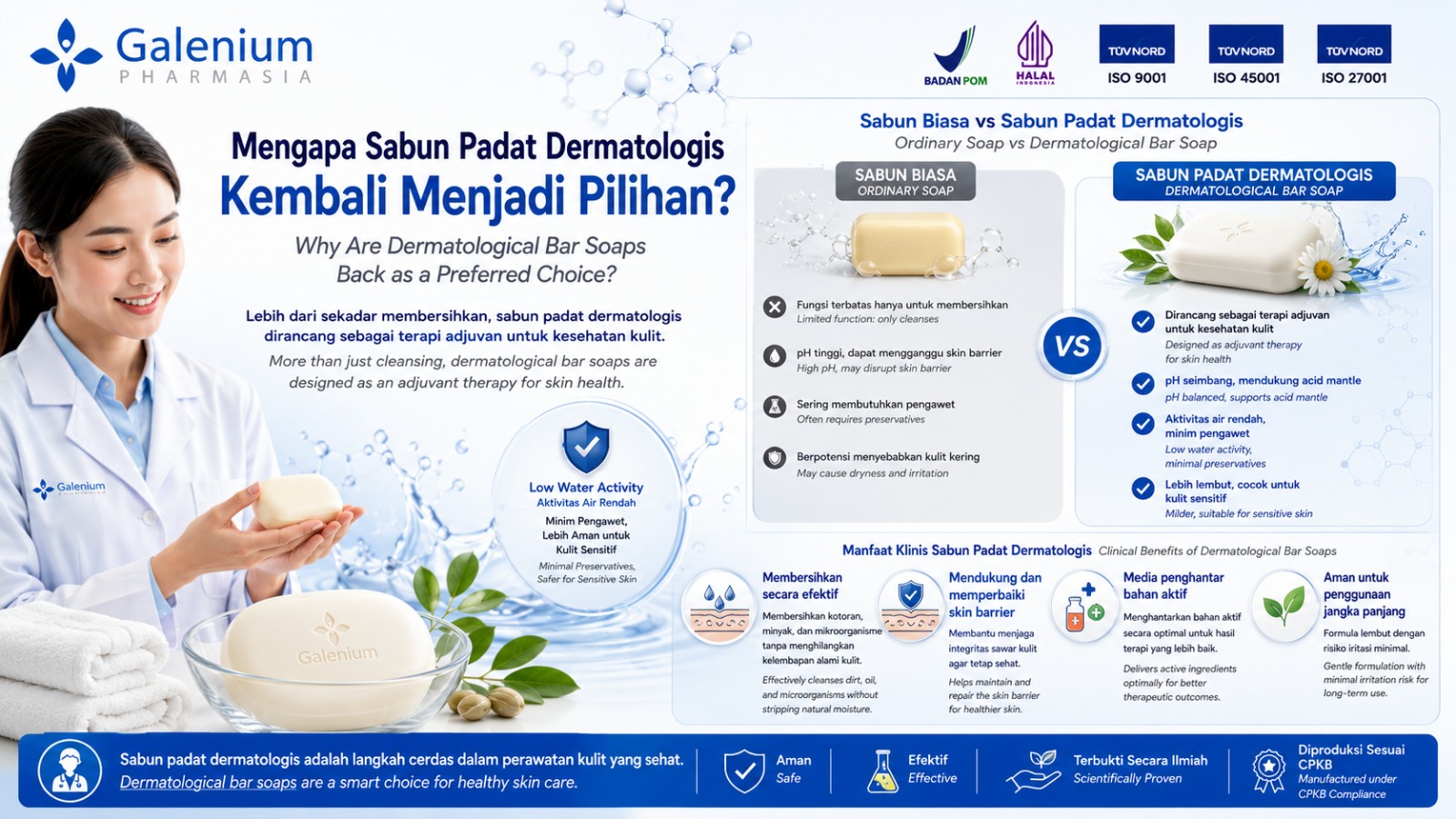
In clinical dermatology practice, the selection of a skin cleanser serves as an essential adjuvant (supportive) therapy to maximize the efficacy of primary topical treatments. Currently, bar soap formulations are being re-examined for their potential in specific therapeutic indications (Mukhopadhyay, 2011). Therapeutic bar soaps do not merely remove surface debris; they also act as pharmacological vehicles to address skin barrier abnormalities (Draelos, 2018).
Physicochemically, the bar soap matrix offers the advantage of highly low water activity. This characteristic prevents the proliferation of microorganisms without the need for high concentrations of preservatives (Barel, Paye, & Maibach, 2014). This preservative-free or low-preservative nature is clinically beneficial for patients with a history of irritant contact dermatitis or skin sensitivities triggered by preservatives in liquid cosmetics.
The development of bar soap formulations in the cosmeceutical industry requires a shift in focus from mere cleansing to skin barrier repair. The production process of these preparations is mandated to comply with Good Manufacturing Practices for Cosmetics (CPKB) regulations, ensuring the homogeneity and stability of active ingredients within the solid matrix in every commercial batch (BPOM, 2020).
2. Bar Soap Formulation for the Management of Acne Vulgaris
Acne vulgaris is an inflammation of the pilosebaceous unit requiring intervention to reduce sebum and control the proliferation of Cutibacterium acnes bacteria. The use of cleansers containing keratolytic agents is a standard component in acne-prone skin care (Decker & Graber, 2012). Salicylic acid is frequently integrated into the soap matrix because its lipophilic nature allows the molecule to penetrate lipid-clogged follicles (Decker & Graber, 2012).
In addition to salicylic acid, sulfur is a classic active ingredient providing mild keratolytic and bacteriostatic effects, which has been shown to support the reduction of lesion counts in mild to moderate acne (Keri & Shiman, 2009). Although clinically beneficial, formulating sulfur in bar soaps presents organoleptic stability challenges. Sulfur has the potential to alter the preparation's color (discoloration) and produce an odor that is less acceptable to consumers (Barel, Paye, & Maibach, 2014). Formulators manage this risk through the addition of chelating agents or encapsulation technologies.
From a manufacturing perspective, the incorporation of powdered active ingredients into the soap mass requires controlled mechanical milling and homogenizing (plodding) processes. Inhomogeneous particle distribution can result in localized high-concentration spots of active ingredients on the soap bar, which risks inducing localized skin irritation (Barel, Paye, & Maibach, 2014). The validation of this mixing process is strictly monitored by the quality assurance system at the production facility.
3. The Syndet Bar Approach for Sensitive Skin and Atopic Dermatitis
Conventional bar soaps (the result of alkali saponification) inherently possess an alkaline pH, generally ranging from 9 to 10. Repeated application of alkaline soaps potentially disrupts the skin's acid mantle, elevates the pH of the stratum corneum, and triggers the depletion of essential lipids (Ali & Yosipovitch, 2013). In patients with atopic dermatitis or sensitive skin, this exacerbates barrier function impairment and increases Transepidermal Water Loss (TEWL) (Ali & Yosipovitch, 2013).
As a dermatological alternative, the industry developed the Syndet (Synthetic Detergent) bar. This base formulates synthetic surfactants—such as sodium cocoyl isethionate—which facilitate adjusting the product's pH to align with the skin's physiological pH (pH 5.5 - 6.0) (Abbas, Goldberg, & Massaro, 2004). Clinical analyses indicate that cleansers within this acidic to neutral pH range significantly reduce skin irritation potential when compared to conventional soaps (Abbas, Goldberg, & Massaro, 2004).
Syndet bars are frequently modified into superfatted soaps through the incorporation of emollients and occlusives, such as ceramides or plant-based fatty acids. The addition of these agents serves to leave a residual protective lipid layer on the skin post-rinsing (Mukhopadhyay, 2011). The manufacturing of Syndet bars requires production equipment with specific temperature controls, given that the viscosity and rheology of the Syndet mass differ substantially from standard soap bases during the stamping process.
4. Application of Bar Soaps in Antifungal Therapy
Superficial fungal infections, such as tinea corporis and pityriasis versicolor, are often managed with the aid of antifungal cleansers. Bar soaps provide a practical platform for antifungal agents, such as zinc pyrithione or ketoconazole, to help reduce the population of dermatophyte spores on the epidermal surface (Elewski et al., 2015).
The success of these wash-off preparations is influenced by the active ingredient's contact time with the skin. To achieve adequate penetration into the stratum corneum, the soap lather generally needs to be left for a few minutes on the infected area before rinsing (Elewski et al., 2015). On the formulation side, the addition of zinc pyrithione requires meticulous compatibility testing, as the compound can react with metal ions in water or other excipients, which may compromise the preparation's stability (Barel, Paye, & Maibach, 2014).
5. CPKB Manufacturing Standards at PT Galenium Pharmasia Laboratories
Replicating dermatological bar soap formulas from a laboratory scale to a commercial scale involves strict machine variable controls. Technical parameters include optimizing moisture content to remain within the 10-14% range, as well as managing cylinder temperatures on the extruder machine (Barel, Paye, & Maibach, 2014). Deviations from these parameters risk producing physical defects in the product, such as soap cracking or a gritty texture (grittiness).
PT Galenium Pharmasia Laboratories operates manufacturing services (Toll Manufacturing / CDMO) aligned with national regulatory guidelines. Based on BPOM guidelines, the implementation of Good Manufacturing Practices for Cosmetics (CPKB) is mandated to ensure comprehensive quality, encompassing equipment sanitation, raw material qualification, and finished product testing procedures in the laboratory (BPOM, 2020). This system is crucial for preventing cross-contamination incidents between products.
Our facilities are equipped with soap processing infrastructure capable of accommodating both conventional lipid bases and Syndet matrices. Through B2B collaborations, our company facilitates brand owners and clinical institutions to delegate the technical production processes and regulatory registration, ensuring the efficacy and safety of the resulting dermatological soap products are consistently maintained.
References
- Abbas, S., Goldberg, J. W., & Massaro, M. (2004). Personal cleanser technology and clinical performance. Dermatologic Therapy, 17(s1), 39-48.
- Ali, S. M., & Yosipovitch, G. (2013). Skin pH: from basic science to basic skin care. Acta Dermato-Venereologica, 93(3), 261-267.
- Barel, A. O., Paye, M., & Maibach, H. I. (2014). Handbook of Cosmetic Science and Technology (4th ed.). CRC Press.
- Badan Pengawas Obat dan Makanan (BPOM) Republik Indonesia. (2020). Peraturan Badan Pengawas Obat dan Makanan Nomor 31 Tahun 2020 tentang Persyaratan Mutu Kosmetika dan Pedoman Cara Pembuatan Kosmetika yang Baik.
- Decker, A., & Graber, E. M. (2012). Over-the-counter acne treatments: a review. The Journal of Clinical and Aesthetic Dermatology, 5(5), 32-40.
- Draelos, Z. D. (2018). The science behind skin care: Cleansers. Journal of Cosmetic Dermatology, 17(1), 8-14.
- Elewski, B. E., Hughey, L. C., Sobera, J. O., & Hay, R. (2015). Fungal Diseases. In Dermatology (4th ed., pp. 258-297). Elsevier.
- Keri, J., & Shiman, M. (2009). An update on the management of acne vulgaris. Clinical, Cosmetic and Investigational Dermatology, 2, 105-110.
- Mukhopadhyay, P. (2011). Cleansers and their role in various dermatological disorders. Indian Journal of Dermatology, 56(1), 2-6.