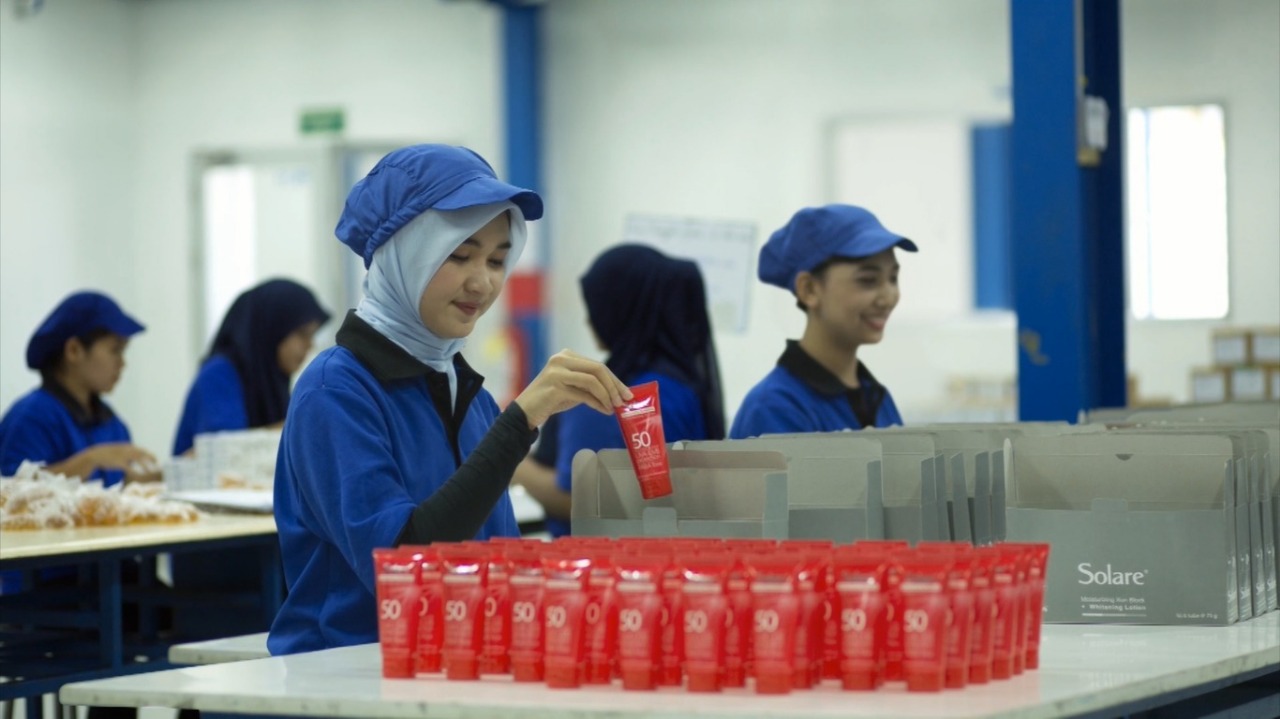
The beauty and personal care industry is evolving rapidly, attracting both established brands and new entrants looking to launch innovative products. To bring products to market efficiently, many brands collaborate with manufacturing partners — typically through OEM, ODM, or Private Label models.
Although these three models are often used interchangeably, each represents a distinct manufacturing approach with different implications for cost, customization, product control, and market strategy.
This article explains the differences clearly and professionally, helping brand owners determine which model best fits their business goals.
1. OEM (Original Equipment Manufacturer)
Definition
OEM refers to a manufacturing model in which the factory produces products based on specifications, formulas, or designs provided by the brand owner.
In this model, the brand owner maintains full control over:
- Formula and raw materials
- Product specifications
- Quality standards
- Packaging design
- Product claims and positioning
The OEM manufacturer acts as a production facility that executes the process according to the brand’s requirements.
Advantages of OEM
- Full control over formula and product quality
- High exclusivity — ideal for innovative or premium products
- Enables strong brand differentiation
- Suitable for brands with R&D capabilities or unique concepts
Limitations of OEM
- Requires existing formula or R&D support
- Higher initial development costs
- Longer product development timeline
2. ODM (Original Design Manufacturer)
Definition
ODM refers to a model in which the factory provides the formula, base design, and product concept, and the brand owner adapts or customizes it for their own brand.
In short: the product already exists, and the brand customizes or adopts it.
ODM is ideal for:
- Standard skincare lines
- Trend-driven products
- Body care, hair care, and general OTC categories
Advantages of ODM
- Faster time-to-market
- Lower development costs
- Minimal R&D risk
- Ideal for growing brands or category expansion
Limitations of ODM
- Limited product exclusivity
- Base formula may be shared with multiple brands
- Lower differentiation potential
3. Private Label
Definition
Private Label is the simplest model, where the manufacturer offers ready-made products that brands can label with their own branding.
Private Label is considered a more basic version of ODM because:
- Formulas are fixed and cannot be changed
- Claims are standardized
- Packaging usually follows factory templates
It is widely used by:
- Retail chains
- E-commerce brands
- Distributors
- Brands focused purely on marketing and sales
Advantages of Private Label
- Lowest cost
- Fastest launch timeline
- Minimal risk
- Ideal for market testing or pilot launches
Limitations of Private Label
- No product exclusivity
- Very limited customization
- Higher competition risk if multiple brands use the same product base
Comparison: OEM vs ODM vs Private Label
|
Aspect |
OEM |
ODM |
Private Label |
|
Formula |
Created by the brand |
Provided by manufacturer; modifiable |
Fixed; no modification |
|
Differentiation |
Very high |
Moderate |
Low |
|
Exclusivity |
High |
Negotiable |
None |
|
Upfront cost |
High |
Medium |
Low |
|
Time-to-market |
Longest |
Fast |
Fastest |
|
Best for |
Established or premium brands |
Growing brands |
New brands, retailers, e-commerce |
4. Which Model Is Right for Your Brand?
Choose OEM if you:
- Want a fully unique and exclusive product
- Target premium or clinical-grade categories
- Have strong product concepts that require custom R&D
Choose ODM if you:
- Need faster product development
- Want customizable base formulas
- Aim to expand your product portfolio quickly
Choose Private Label if you:
- Need the fastest and most affordable option
- Are testing the market or building initial brand presence
- Only require a ready-made product to rebrand
Conclusion
Choosing the right manufacturing model — OEM, ODM, or Private Label — significantly impacts your brand strategy and long-term product positioning.
Brands aiming for innovation and exclusivity often choose OEM, while those prioritizing speed and efficiency opt for ODM or Private Label solutions.
As an experienced cosmetics and personal care manufacturer, PT Galenium Pharmasia Laboratories provides flexible solutions tailored to your brand’s needs — from custom product development (OEM/CDMO) to semi-custom options (ODM) and fast-launch Private Label products.